How predictive UX is redefining what great UI UX design services deliver

The Evolution of UX: From Reactive to Predictive
For years, digital products have been built around a simple assumption: users will interact, and systems will respond. This reactive approach has shaped the foundation of most digital experiences.
But that model is rapidly changing.
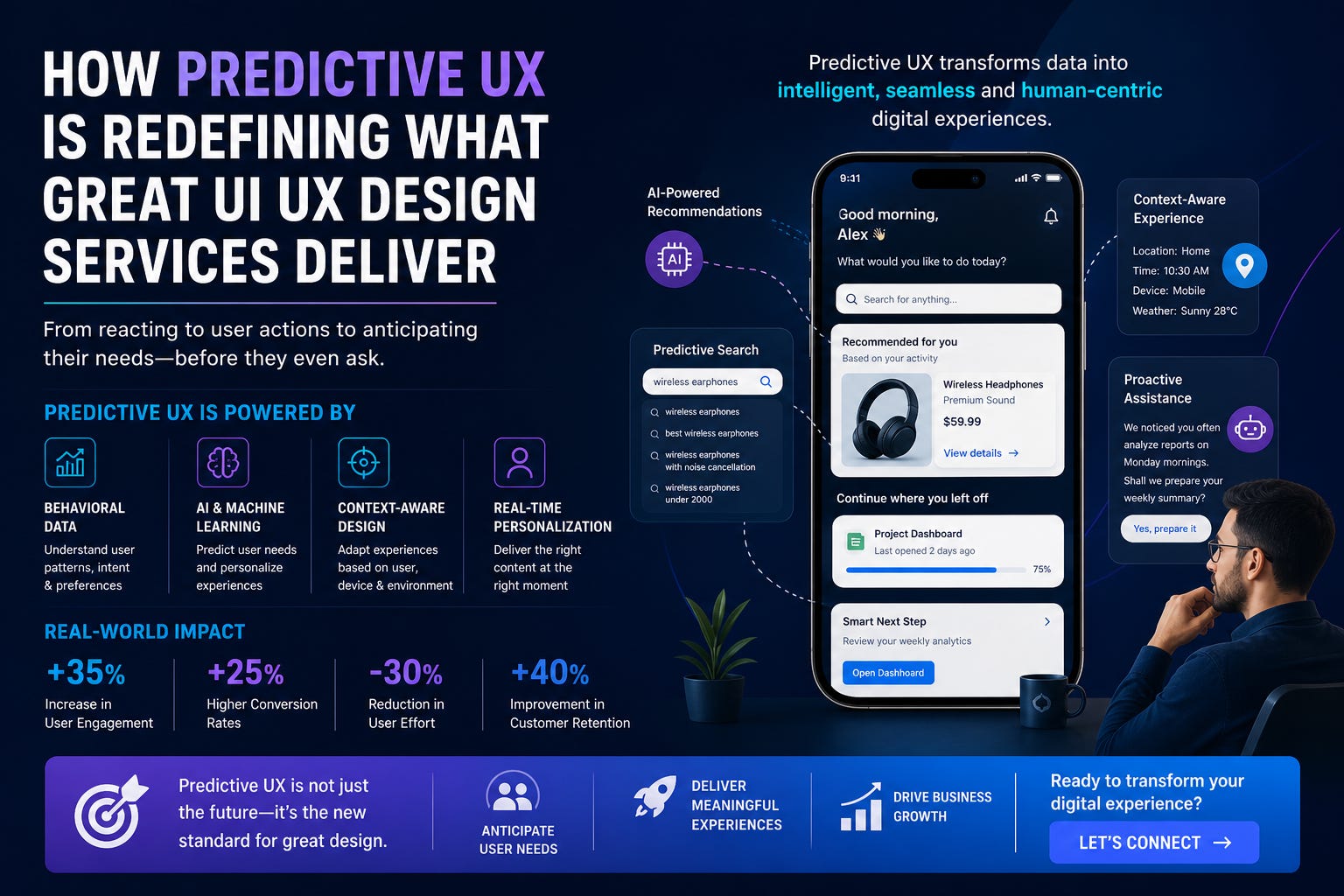
Today, the most advanced UI UX design services are no longer just reacting to user behavior they are anticipating it. This shift is driven by predictive UX, a data-driven approach that leverages artificial intelligence, behavioral analytics, and real-time insights to deliver experiences before users even realize they need them.
Predictive UX is not just an enhancement. It is redefining what users expect and what businesses must deliver to stay competitive.
What Is Predictive UX?
Predictive UX refers to designing user experiences that anticipate user needs and actions based on historical data, patterns, and contextual signals.
Instead of asking:
“What does the user want now?”
Predictive UX asks:
“What will the user need next?”
Modern UI UX design services integrate predictive capabilities into:
Personalized recommendations
Smart search suggestions
Adaptive interfaces
Automated workflows
This creates a seamless experience where friction is minimized and engagement increases naturally.
Why Predictive UX Matters for Modern Businesses
1. Rising User Expectations
Users today are accustomed to platforms that “just know” what they want think streaming services, eCommerce platforms, and SaaS tools.
If your product doesn’t anticipate user needs, it risks feeling outdated.
2. Data Is Now Abundant
With access to user data, analytics tools, and behavioral tracking, businesses have the ability to understand users at a deeper level than ever before.
The challenge is not data collection it’s turning that data into meaningful experiences, which is where advanced UI UX design services come in.
3. Competitive Differentiation
In crowded markets, functionality alone is no longer enough.
Predictive UX enables businesses to:
Reduce friction
Improve retention
Increase conversions
This makes it a key differentiator.
Key Components of Predictive UX
1. Behavioral Data Analysis
Predictive UX relies on analyzing:
User journeys
Click patterns
Session behavior
Interaction frequency
This data helps identify patterns that inform future actions.
2. AI and Machine Learning Integration
Modern UI UX design services incorporate AI models that:
Predict user intent
Personalize content
Optimize workflows
These systems improve continuously as more data is collected.
3. Context-Aware Design
Predictive UX considers:
Location
Device
Time of use
User preferences
This allows interfaces to adapt dynamically.
4. Real-Time Personalization
Instead of static experiences, users see:
Customized dashboards
Relevant recommendations
Dynamic UI elements
How UI UX Design Services Are Evolving
Traditional UX design focused on:
Wireframes
Visual design
Usability testing
Today, leading UI UX design services go beyond this by integrating:
1. Data Science with Design
Design decisions are now backed by:
Data insights
Predictive modeling
User behavior analytics
2. Continuous Optimization
UX is no longer a one-time process.
It involves:
A/B testing
Real-time feedback loops
Iterative improvements
3. Cross-Functional Collaboration
Predictive UX requires collaboration between:
Designers
Developers
Data scientists
Product managers
Real-World Applications of Predictive UX
1. eCommerce Platforms
Product recommendations based on browsing history
Predictive search suggestions
Personalized offers
2. SaaS Applications
Smart dashboards tailored to user roles
Workflow automation
Feature recommendations
3. FinTech Solutions
Fraud detection alerts
Spending insights
Predictive financial planning
4. Healthcare Platforms
Patient behavior tracking
Predictive diagnostics
Personalized care journeys
Benefits of Predictive UX in UI UX Design Services
1. Improved User Engagement
Users are more likely to engage when experiences feel intuitive and personalized.
2. Higher Conversion Rates
Predictive recommendations lead to:
Better decision-making
Faster user actions
Increased revenue
3. Reduced User Friction
By anticipating needs, users spend less time navigating and more time achieving their goals.
4. Enhanced Customer Retention
Personalized experiences create stronger user loyalty.
Challenges in Implementing Predictive UX
While powerful, predictive UX comes with challenges:
1. Data Privacy Concerns
Businesses must ensure:
Transparent data usage
Compliance with regulations
2. Complexity in Implementation
Integrating AI and predictive systems requires:
Technical expertise
Scalable infrastructure
3. Risk of Over-Personalization
Too much automation can feel intrusive if not handled carefully.
Best Practices for Implementing Predictive UX
1. Start with Data Foundations: Ensure accurate data collection and analysis.
2. Focus on User Value : Predictions should enhance the experience — not complicate it.
3. Test and Iterate : Continuously refine predictive models based on user feedback.
4. Maintain Transparency : Users should understand how and why recommendations are made.
The Future of UI UX Design Services
Predictive UX is not the end it’s the beginning of a more intelligent design era.
Future trends include:
Hyper-personalized interfaces
Voice-driven predictive systems
AI-generated UI elements
Emotion-aware design
As technology evolves, UI UX design services will become increasingly proactive, intelligent, and user-centric.
Conclusion: From Design to Anticipation
The role of UX is shifting from solving problems to preventing them before they occur.
Predictive UX represents a fundamental change in how digital products are built and experienced.
Businesses that adopt this approach will:
Deliver superior user experiences
Gain competitive advantage
Build long-term customer relationships
And at the center of this transformation are advanced UI UX design services that combine design, data, and intelligence.